

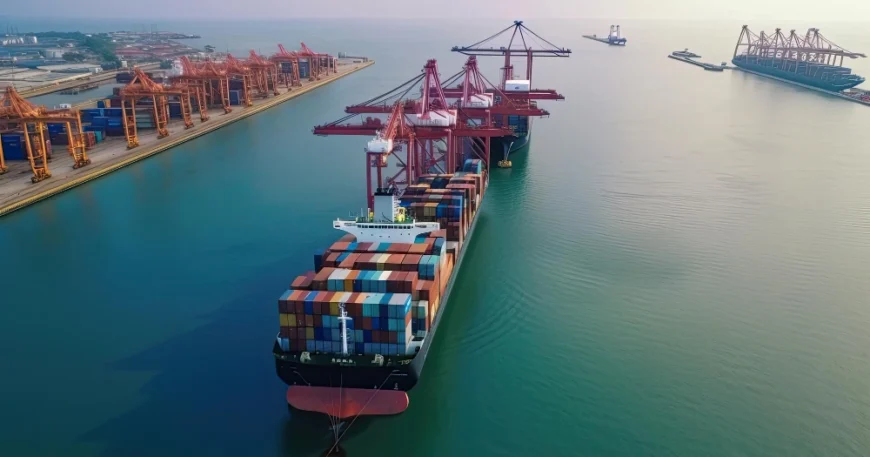
How to Choose the Right Sea Cargo Service in Qatar: A Practical Guide for Businesses
Sea freight moves more global trade by volume than any other transport mode. For businesses in Qatar importing raw materials or exporting finished goods to markets across Asia, Europe, Africa or the Americas, choosing the right sea cargo service in Qatar isn’t a minor procurement decision — it’s one that directly affects your delivery reliability, your shipping costs and your ability to meet customer commitments.
Qatar’s position as a major Gulf trade hub — anchored by the Port of Hamad, one of the largest deep-water container ports in the Middle East — means businesses here have access to a wide network of shipping lines and ocean freight options. That choice is a genuine advantage. But it also means the market is crowded and the quality gap between providers is significant.
1. Understand Whether You Need FCL or LCL Before Comparing Providers
Before evaluating specific sea cargo services in Qatar the first question to answer is what type of ocean freight your cargo actually requires. The two main options are Full Container Load (FCL) and Less than Container Load (LCL) and they suit very different shipping profiles.
FCL gives your cargo exclusive use of an entire container typically a 20-foot (TEU) or 40-foot unit. The container is sealed at origin and opened only at destination. This is the right choice when your cargo volume fills or nearly fills a container, when you’re shipping high-value or sensitive goods that benefit from minimal handling and when transit speed and security are priorities. FCL also tends to be the more cost-effective option per unit once your volume reaches a sufficient threshold.
LCL allows your goods to share container space with consignments from other shippers. You pay only for the space your cargo occupies which makes it the practical choice for smaller shipments, for businesses testing new markets with lower initial volumes and for those who need flexibility to ship without waiting until they accumulate a full container-worth of goods.
A sea cargo service in Qatar worth working with will help you evaluate which option fits your volume and frequency rather than defaulting to one size fits all. Our LCL cargo service and consolidation service are both designed to make smaller-volume ocean freight as cost-efficient and well-managed as a full container movement.
2. Evaluate Reputation and Local Track Record
Reputation is one of the most reliable indicators of how a sea cargo service in Qatar actually performs when things get complicated — and in international freight complications happen. Vessels are delayed. Ports experience congestion. Customs clearance throws up unexpected requirements.
What separates a strong logistics partner from a weak one is not whether issues arise. It is how quickly and transparently they communicate when issues arise and what they do to resolve them. A provider with a genuine track record in sea cargo services in Qatar will have established processes for managing these situations and a team that does not go quiet when a shipment hits a problem.
When assessing reputation look for:
- Verified reviews from businesses with similar cargo types and trade lanes to yours
- Evidence of experience with the specific routes you need such as Gulf to Asia, Gulf to Europe or Gulf to Africa
- Transparency about how they handle delays and what recourse you have if something goes wrong
- A physical Qatar-based presence rather than a company managing Qatar work from a regional office elsewhere
For a broader framework on what separates reliable freight companies from unreliable ones read our post on key qualities that define the best cargo company in Qatar.
3. Confirm the Provider Handles Full Documentation and Customs Clearance
Documentation is where sea cargo services in Qatar most commonly create problems for businesses. International ocean shipments require a specific set of documents each of which must be accurate, complete and submitted to the right authorities within the required timeframes. Errors do not just cause delays. They can result in cargo holds at port, financial penalties and consignments that miss critical delivery windows.
Standard documents required for a sea cargo shipment include:
- Bill of Lading — the primary contract between the shipper and the carrier confirming terms of carriage
- Commercial Invoice and Packing List — detailing the goods, their declared value and the parties involved
- Certificate of Origin — confirming the country in which the goods were manufactured
- Import and Export Declarations — filed with Qatar Customs and the relevant authority at destination
- Dangerous Goods Declaration — required for any cargo classified as hazardous under IMDG regulations
- Health or phytosanitary certificates — required for food, agricultural or animal-derived products
A sea cargo service in Qatar that handles all of this in-house rather than passing documentation responsibilities back to you or outsourcing to a third party, significantly reduces the risk of errors and delays. Our customs clearance team manages all documentation preparation and submission on behalf of our clients and maintains direct coordination with Qatar Customs and Hamad Port authorities throughout the process.
For a detailed breakdown of what freight forwarding documentation involves and who is responsible for each element read our post on what a freight forwarder in Qatar does for smooth shipping.
4. Ask About Cargo Insurance and Claims Handling
Every sea cargo service in Qatar carries inherent risk. Cargo can be damaged by seawater ingress, shifting during rough weather, improper stowage or port handling incidents. High-value goods, fragile items and temperature-sensitive cargo are particularly vulnerable.
Cargo insurance is not optional for any business shipping goods of meaningful value by sea. When evaluating a sea cargo service in Qatar confirm:
- Whether they offer cargo insurance directly or can arrange it through a reputable insurer
- What the policy covers all-risk policies provide broader protection than named-peril policies
- The process for making a claim and how quickly claims are typically resolved
- Whether the declared value of your goods matches what the policy would pay out
Be cautious of providers who offer only carrier liability as a default. Standard carrier liability under the Hague-Visby Rules is limited to a fixed amount per package or per kilogram which in most cases is far below the actual commercial value of the cargo. (Source: International Chamber of Commerce — Trade Finance)
A sea cargo service in Qatar that takes insurance seriously will walk you through your options clearly rather than treating it as an afterthought on the booking form.
5. Check Real-Time Tracking Capabilities
Transit times for a sea cargo service in Qatar vary considerably by trade lane from a few days for Gulf to Gulf shipments to several weeks for cargo moving to Europe or the Americas. During that time your business needs to know where the shipment is and when to expect it.
Real-time tracking is no longer a premium feature. It is a basic operational requirement. Without it you cannot plan warehouse receiving schedules, you cannot manage production timelines that depend on incoming materials and you cannot give your own customers accurate delivery estimates.
Ask any sea cargo service in Qatar you are evaluating:
- At what stages of the journey will you receive updates?
- Can you access tracking information directly or do you need to call the provider each time?
- How quickly does the provider communicate when a delay occurs?
- Who is your named point of contact throughout the shipment?
A provider with strong tracking and communication capabilities makes sea freight a manageable and predictable part of your supply chain rather than a process you have no visibility into for weeks at a time.
6. Look for Experience with Your Specific Cargo Type
Not all cargo is the same and a sea cargo service in Qatar that handles standard dry goods shipments efficiently may not be equipped for more specialised requirements. Before committing confirm that the provider has experience and the necessary equipment for your specific cargo type.
Oversized and project cargo — Industrial machinery, structural steel and modular equipment that exceeds standard container dimensions requires flat-rack or open-top containers, specialist lashing and port coordination. Our post on project cargo logistics and managing oversized shipments efficiently covers how these movements are planned and what businesses need to prepare for.
Hazardous materials (DG cargo) — Goods classified under IMDG codes require careful documentation, approved packaging and compliance with carrier regulations. Confirm that the sea cargo service manages DG classification and compliance in-house rather than passing it back to you.
Temperature-sensitive cargo — Pharmaceutical products, food items and biological materials may require refrigerated containers (reefer units) with controlled temperature monitoring throughout transit. Ask specifically about the provider’s reefer handling capability and how temperature data is recorded during the journey.
High-value goods — Electronics, jewellery and precision instruments benefit from enhanced handling protocols, reduced touchpoints and appropriate insurance coverage.
The right sea cargo service in Qatar will ask about your cargo type early in the conversation rather than assuming standard handling is appropriate for all shipments.
7. Understand the Full Cost Before Committing
Price comparison in sea cargo services in Qatar is more complicated than it looks. A low headline freight rate can become an expensive arrangement once port handling fees, documentation charges, customs clearance costs, fuel surcharges and destination delivery fees are added.
When requesting quotes ask for a full cost breakdown that includes:
- Ocean freight rate (per TEU for FCL or per CBM for LCL)
- Origin charges including documentation and port handling
- Destination charges including delivery and customs clearance at the receiving end
- Any surcharges currently applied to the route such as fuel adjustment factor or congestion surcharge
- The basis on which the rate is valid and how much notice you will receive of changes
A sea cargo service in Qatar that gives you a complete all-in quote from the outset rather than a low number followed by a long list of additions is one operating transparently. For an overview of how sea freight pricing compares to other modes read our post on how much cargo shipping costs in Qatar.
8. Confirm Compliance with Qatar Customs and International Shipping Regulations
Choosing a sea cargo service in Qatar that is fully compliant with Qatar Customs requirements and international shipping regulations protects your business from compliance risk that can cost far more than the savings made by cutting corners on provider selection.
Confirm that the provider:
- Is a licensed freight forwarder and cargo agent in Qatar
- Has established relationships with Qatar Customs and Hamad Port authorities
- Understands the import regulations of your key destination markets
- Has experience managing DG classification, certificate of origin requirements and any applicable permit processes for your cargo type
Local registration and licensing in Qatar is a meaningful indicator of accountability. A sea cargo service operating from a registered Qatar entity is subject to local regulatory oversight in a way that an internationally-managed operation may not be.
9. Evaluate Expertise on Your Key Trade Routes
Qatar has several well-established sea freight corridors that businesses use regularly. Each route has its own sailing schedules, transit times, port requirements and carrier options. A sea cargo service in Qatar that knows your specific trade lane in detail rather than treating it as one of dozens of generic routes will consistently deliver better outcomes.
One of the most active routes for Qatar-based businesses is the UAE to Qatar corridor. Container shipments between Jebel Ali Port in Dubai and Hamad Port move frequently and our dedicated FCL Dubai to Doha service is structured specifically around the requirements and documentation of this trade lane.
For businesses moving goods between Qatar and international markets ask your provider which specific shipping lines they work with on your route, what the typical sailing frequency is and what contingency options exist if a scheduled sailing is delayed or cancelled.
10. Choose a Sea Cargo Service in Qatar That Offers Multimodal Capability
The most operationally efficient businesses in Qatar do not manage separate relationships for sea freight, air freight and road freight. They work with a logistics provider capable of handling all three coordinating each mode where it makes the most sense and managing the full journey under a single point of accountability.
This matters in practice because most international shipments involve more than one mode. Cargo arrives by sea and then needs last-mile road delivery. An urgent consignment may need to go by air while the regular bulk order follows by sea. A GCC cross-border movement may involve both road and sea freight on different legs.
At Unicorn Gulf Logistics & Shipping WLL we manage sea freight, air freight and land freight services in Qatar as an integrated offering — so your cargo moves through the most appropriate mode at each stage without you having to coordinate between multiple providers.
For guidance on what makes a logistics company genuinely reliable read our post on why your business needs a reliable logistics company in Qatar and for a full comparison framework read our post on how to choose the best shipping company in Qatar for your business.
Frequently Asked Questions About Sea Cargo Services in Qatar
What is the difference between FCL and LCL in a sea cargo service in Qatar?
FCL (Full Container Load) means your cargo has exclusive use of an entire container. LCL (Less than Container Load) means your goods share container space with other shippers. FCL suits larger volumes and provides faster transit with fewer handling touchpoints. LCL is more cost-effective for smaller shipments and irregular shipping schedules.
How long does a sea cargo service in Qatar take to reach international destinations?
Transit times vary by destination. Gulf to Gulf routes typically take 3 to 7 days. Shipments to South Asia take approximately 7 to 14 days. Cargo moving to Europe or the Americas can take between 20 and 35 days depending on routing and carrier.
Does cargo insurance cover all types of damage during sea freight?
Coverage depends on the policy type. All-risk policies cover a broad range of damage scenarios while named-peril policies cover only the specific risks listed. Standard carrier liability is typically far below the commercial value of most cargo. Always confirm your insurance terms before shipment.
How do I know if a sea cargo service in Qatar is licensed and legitimate?
Ask for their Qatar freight forwarding license and confirm they are registered as a cargo agent in Qatar. Local registration indicates regulatory accountability that internationally-managed operations may not carry.
Can Unicorn Gulf handle both FCL and LCL as part of its sea cargo service in Qatar?
Yes. We manage both FCL and LCL shipments through Hamad Port with full documentation, customs clearance and real-time tracking included. Our LCL cargo service and consolidation service handle smaller-volume ocean freight efficiently.
What should I do if my shipment is delayed?
Contact your freight provider immediately. A reliable sea cargo service in Qatar will already be tracking your shipment and will proactively notify you of delays with an updated estimated arrival and a resolution plan.
Can a sea cargo service in Qatar handle hazardous goods?
Many categories of hazardous goods can be transported by sea under IMDG regulations. Classification, documentation and packaging must comply with specific requirements. Confirm that your provider manages DG cargo in-house rather than declining or passing the responsibility back to you.
The Right Sea Cargo Service in Qatar Protects More Than Your Shipment
Choosing a sea cargo service in Qatar is ultimately a decision about who you trust to represent your business at every stage of an international movement. The documentation carries your company name. The goods inside the container are your inventory, your cost and your commitment to whoever is waiting for them at the other end.
A provider who gets this right makes sea freight the reliable and cost-efficient backbone it should be. One who does not turns it into a source of ongoing operational friction that costs far more than any apparent saving on the freight rate.
At Unicorn Gulf Logistics & Shipping WLL we manage sea cargo for businesses across Qatar with the same level of care and accountability we would want applied to our own shipments. Whether you are evaluating your first container movement or looking to improve on an existing freight arrangement our team is ready to help.
Contact Unicorn Gulf today to discuss your sea cargo requirements and get a tailored quote from our Doha-based team.
Explore more from the Unicorn Gulf blog:
- How an LCL Freight Forwarder Helps Businesses Reduce Shipping Costs
- Project Cargo Logistics: Managing Oversized and Heavy Shipments Efficiently
- Key Qualities That Define the Best Cargo Company in Qatar
- How Much Does Cargo Shipping Cost in Qatar?
- Required by a Freight Forwarder in Qatar for Smooth Shipping


Warning: Undefined array key "mobile*" in /home/u815024725/domains/unicorngulf.com/public_html/wp-content/themes/hardman/comments.php on line 75